Fitbit Air Stress Tracking

Last Updated: September 18, 2026
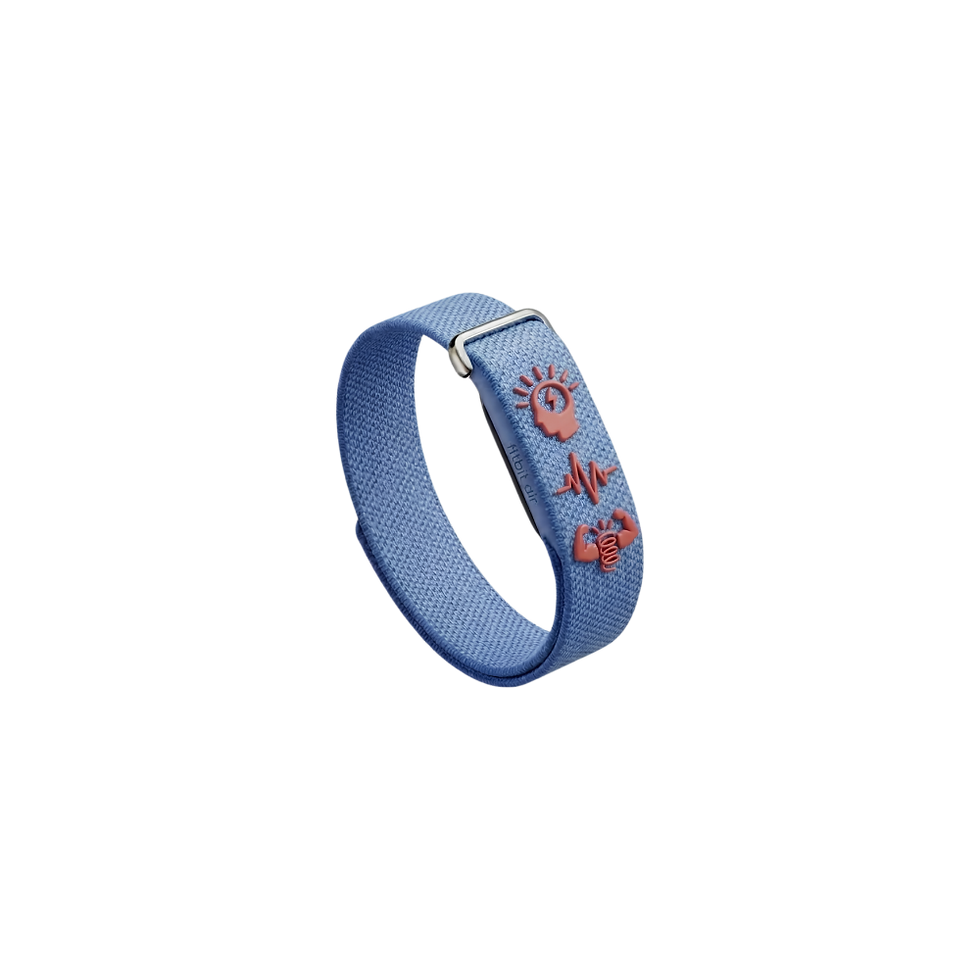
Fitbit Air stress tracking does not produce a number. There is no Stress Management Score on the Air, and since May 19, 2026 there is no Stress Management Score anywhere in Google Health. Google replaced it with Resilience, a rating of Optimal, Balanced or Low that lives in the Mental wellbeing section of the Health tab. The Google Fitbit Air is on Google's compatibility list for Resilience, so the feature does work on the band. What the Air cannot do is the part most people are actually searching for: it has no electrodermal activity sensor, so it cannot run an EDA scan and it does not get Body Responses. Here is what the rating is built from, where to find it, and why the number you are looking for is gone.
I went looking for the Air's stress score in September 2026 because the search data says several hundred people a month are looking for the same thing, and the answer turned out to be that the thing they are searching for stopped existing four months earlier. If you want to see which sensors each tracker leans on to infer stress before you read further, the Stress Factors by Wearable tool lays them out side by side.
The Air has no EDA sensor, and that decides the rest
Google's tech specs page for the Air lists an optical heart rate sensor, a 3-axis accelerometer with a gyroscope, red and infrared sensors for blood oxygen, a device temperature sensor and a vibration motor. There is no electrodermal activity sensor on that list. Those blood oxygen sensors carry a separate problem of their own, which is the subject of why Fitbit Air SpO2 says not tracked.
That single omission explains most of the confusion in the query data. EDA is the sensor that reads tiny changes in sweat gland activity on your skin, and it is the one that powers the two features people associate with Fitbit stress tracking: the manual EDA scan and Body Responses. Google lists Body Responses for the Pixel Watch 2 and later and for the Fitbit Sense series. The Air is on neither list.
Feature | On the Fitbit Air | What Google says |
Optical heart rate sensor | Yes | Listed on the Air tech specs page |
Heart rate variability | Yes | Listed for the Air in the Google Health vitals table |
EDA (electrodermal activity) sensor | No | Absent from the Air tech specs page |
Manual EDA stress scan | No | Requires an EDA sensor |
Body Responses | No | Listed for Pixel Watch 2 and later, and the Fitbit Sense series |
Numeric stress score | No | Google does not list one for the Air |
Resilience rating | Yes | Google Fitbit Air appears on the Resilience compatibility list |
One thing worth being precise about: Google has never published a statement saying the Air cannot do EDA or stress scans. The evidence is absence. The sensor is not on the spec sheet, the Air is not on the Body Responses device list, and the May 2026 launch post, the store page and the Air setup help page do not mention stress at all. That is strong, but it is absence rather than a denial, and it is worth reading that way.
If EDA and Body Responses are what brought you here, those belong to a different device family, and we cover how they work in Pixel Watch and Fitbit stress tracking explained. For a sensor by sensor view of which trackers carry which hardware, the Sensor and Hardware Comparison tool is the faster route.
Resilience replaced the Stress Management Score on May 19, 2026
This is the part that makes most of the search queries out of date rather than wrong. Google's page on the redesigned Health app states it plainly: in the Mental Wellbeing section, Resilience replaces Stress score, and it is now described as Optimal, Balanced or Low instead of a numerical value.
So the query "fitbit air stress management score" is looking for a metric that no Fitbit device reports any more. It is not an Air limitation. It is an app-wide change that landed with the Google Health rollout.
Metric | Before May 19, 2026 | After May 19, 2026 |
Name | Stress score | Resilience |
Output | A numerical value | Optimal, Balanced or Low |
Where it lives | Fitbit app | Google Health app, Health tab, Mental wellbeing |
Stress check graphs | In the app | Removed from the app |
EDA scans | Saved into the app | Stay on Charge 5, Charge 6 and Sense, no longer saved to the app |
Two things follow from that table. Owners of a Charge 5, Charge 6 or Sense can still run an EDA scan on the device, but the result no longer flows into an app graph. And Air owners were never in that conversation, because Google does not list a numeric score for the Air at any point in its life.
The Air is not the only Google metric that changed shape in the redesign. Its cardio fitness number moved too, which is the subject of why your Fitbit Air says VO2 max is not tracked.
What feeds Resilience when there is no EDA
Google describes Resilience as drawing on more than 10 factors across three categories. Here is how each one lands on a device without an EDA sensor.
Input group | What Google says it looks at | On the Fitbit Air |
Responsiveness | Heart rate, heart rate variability, and EDA if available | Heart rate and HRV only |
Exertion balance | Short-term workout demand measured against your last week of exercise and movement | Full |
Sleep patterns | Quality and quantity of last night's sleep and of the last week | Full |
Read that top row carefully, because the phrase "if available" is doing real work. Resilience is designed to run with or without an electrodermal signal. On a Sense or a Pixel Watch, the responsiveness input has three streams. On the Air it has two. Google does not publish how much the missing stream changes the rating, and nobody outside Google can measure that from the app.
The practical read is that Air Resilience is mostly a sleep and training load rating with a cardiac autonomic input, not a moment to moment stress readout. That is a meaningful difference if you came expecting the sweat-response version of stress tracking. It is less of a difference than the marketing around EDA would suggest, because heart rate variability was always the heaviest input.
Other wearables split this work differently. WHOOP, Oura and Apple each build their stress or strain figure from a different combination of the same underlying signals, and we compare all of them in how wearables measure stress.
Where to find Resilience in the Google Health app
The rating is two taps deeper than the old stress score was, which is its own source of "my Fitbit Air is not tracking stress" reports.
Open the Google Health app and go to the Health tab.
Open Focus areas.
Select Mental wellbeing.
Open Resilience.
From there you can switch the view between D, W, M, 3M and Y for day, week, month, three months and year.
Resilience shows for accounts without a Premium subscription. Google does not publish a Premium requirement for it, and on a free account it appears as described above.
Resilience gives you the rating. It does not tell you which Tuesday dinner came before a Low week. Kygo reads your Fitbit data alongside your food log and runs the correlation across a 12 to 36 hour window, so you can see whether late caffeine or a heavy evening meal is what moves your HRV and your sleep. It is free on iOS and Android.
If Resilience is blank or looks wrong
Google does not publish a troubleshooting page for Resilience specifically, so this section reasons from Google's own description of the inputs rather than from a support article. Treat it accordingly.
You are looking in the old place. If you still have the Fitbit app installed, or you are looking under a Stress heading, there is nothing to find. The rating only exists in Google Health, under Mental wellbeing.
There is not enough history yet. Two of the three input groups are defined against your last week of data. A band set up yesterday does not have a week of exercise, movement and sleep to measure today against.
You are not sleeping in it. Sleep patterns is a full third of the input, and an Air that comes off at night removes it.
It worked and then stopped. A TikTok discover page exists for "fitbit air resilience score not working", so the complaint is real enough to have its own tag, but it has not been acknowledged by Google and there is no fix published. Worth knowing so you do not spend an evening resetting a band over a server-side problem.
One note on the community answers you will find while searching this. The thread titled "No stress managent score" from June 2026 collected 11 people with the same question and was answered correctly, but by a Diamond Product Expert, who is a volunteer and not Google staff. Only replies badged Google Health Community Specialist are the company speaking.
Common questions
Does the Fitbit Air track stress?
Yes, but only as a qualitative rating. The Google Fitbit Air produces a Resilience rating of Optimal, Balanced or Low, built from heart rate, heart rate variability, exertion balance and sleep. It does not produce a numeric stress score and it cannot run an EDA stress scan.
Does the Fitbit Air have a stress management score?
No. Google replaced the Stress Management Score with Resilience on May 19, 2026 across the whole Health app, and Google does not list a numeric stress score for the Air at any point. Searches for a Fitbit Air stress management score are looking for a metric that no Fitbit device reports any more.
Why is there no number for my Fitbit Air stress level?
Because Google removed the number for every device, not just the Air. In the redesigned Google Health app, the Mental Wellbeing section reports Resilience as Optimal, Balanced or Low instead of a numerical value, and the old stress check graphs were removed from the app at the same time.
Does the Fitbit Air have an EDA sensor?
No. The Air tech specs page lists optical heart rate, accelerometer and gyroscope, red and infrared blood oxygen sensors, a device temperature sensor and a vibration motor. Electrodermal activity is not among them, which is why the Air has no EDA scan and no Body Responses.
Where is stress in the Google Health app on a Fitbit Air?
Health tab, then Focus areas, then Mental wellbeing, then Resilience. The views available are D, W, M, 3M and Y.
Is Fitbit Air stress tracking free or does it need Premium?
Resilience appears on accounts without a Premium subscription. Google does not publish a Premium requirement for it.
What is the difference between Resilience and Body Responses?
Resilience is a daily rating built from heart rate, HRV, exertion and sleep, and it runs on the Air. Body Responses is a continuous EDA feature that flags possible stress events in the moment, and Google lists it for the Pixel Watch 2 and later and the Fitbit Sense series only.
Can I still do an EDA scan on my other Fitbit?
On a Charge 5, Charge 6 or Sense, yes, the scan still runs on the device. What changed in the redesign is that the result no longer saves into an app graph.
The bottom line
Fitbit Air stress tracking exists, it is called Resilience, and it gives you one of three words rather than a score out of 100. The number people are searching for was retired across all of Google Health on May 19, 2026, and the Air never had one before that. The real hardware limit is the missing EDA sensor, which costs the Air the manual stress scan and Body Responses but not Resilience itself, because Google built that metric to run on heart rate and HRV when no electrodermal signal is available.
If you want the rating to mean something, the useful move is to pair it with what you actually did and ate that week. Kygo connects your Fitbit alongside Oura, Apple Health and Garmin, logs food by voice or photo in about 20 seconds, and runs the correlation so a Low week has an explanation attached to it. Free on iOS and Android.
Key sources: Google Fitbit Air tech specs (the sensor list, and the absence of any EDA sensor), Manage stress and mindfulness in Google Health (the Resilience inputs, the Resilience device compatibility list and the Body Responses device list), What is new with the redesigned Google Health app (the Resilience rename, the removal of the stress check graphs and the change to EDA scans), Track your vitals in the Google Health app (the Air vitals table), and Introducing the all-new Fitbit Air (the May 7, 2026 launch details). The user reports come from the Google Health Community thread No stress managent score. All pages were read directly on September 16, 2026.
A note on sources. This post deliberately excludes several figures that circulate on this topic. There is no citation here for a numeric Fitbit Air stress score, because Google has never published one. There is no weighting for how much the absent EDA stream changes a Resilience rating, because Google does not publish it and it cannot be measured from the app. Country-level and firmware-level claims about Resilience failures are left out, because the only sources for them are individual user reports. Several SEO aggregator pages rank well for Fitbit Air stress queries while carrying a 0 to 100 score that no longer exists, and none of them are cited here.
Disclaimer: Kygo is a personal data aggregation and insights platform designed for informational purposes only. The information provided by Kygo, including correlations, patterns, and trends identified in your data, does not constitute medical advice, diagnosis, or treatment. Always consult a licensed healthcare provider with any questions regarding medical conditions.
If your Resilience rating has been stuck on Balanced for a month straight, I would like to know whether your sleep data looks as flat as the rating does.