Fitbit Air SpO2 Not Tracked

Last Updated: September 18, 2026
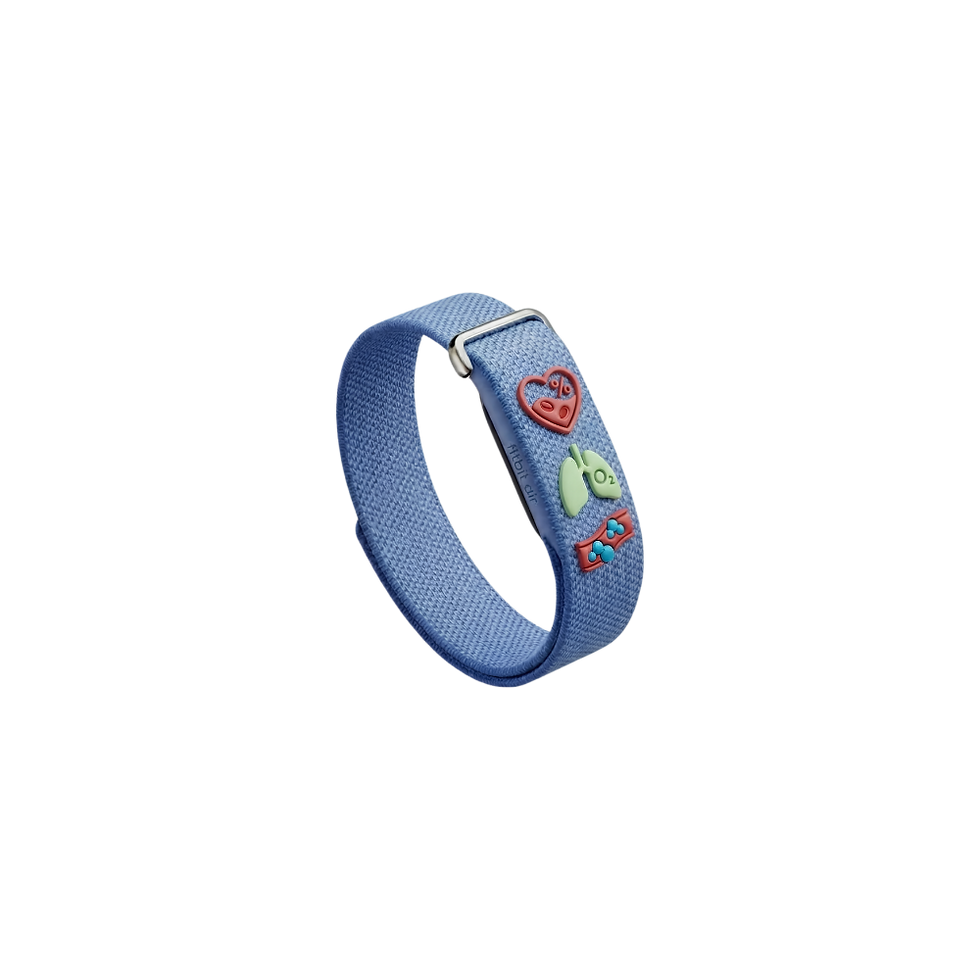
If your Fitbit Air SpO2 is not tracked, the sensor is not the problem. The Google Fitbit Air ships with red and infrared sensors for blood oxygen, and Google lists SpO2 as a supported metric for the Air in its vitals table. The catch is that the Air estimates blood oxygen only during sleep, and Google says SpO2 estimation is not available in all regions. That leaves four reasons the reading is blank: your region is not supported, the sleep conditions were not met, it worked and then stopped, or the number is sitting in Google Health but never reaching Health Connect. Three of those four are documented by Google. Here is how to tell which one you have.
I spent an afternoon in September 2026 reading Google's own SpO2 pages against each other, and the most useful thing I found was that they contradict one another about whether the Air is even on the list. More on that below, because it explains why half the troubleshooting advice you will find does not apply to this device.
The hardware is there, so this is not a missing sensor
Start by ruling out the thing most people assume first. The Air has the optical parts required for a blood oxygen estimate, and Google lists the metric as supported.
Claim | What Google says | Where |
The Air has SpO2 hardware | "Red and infrared sensors for oxygen saturation (SpO2) monitoring" | Air tech specs page |
SpO2 is a supported metric | The vitals table lists the Air with Breathing Rate, HRV, Skin Temperature Variation, SpO2 and resting heart rate | Track your vitals in Google Health |
It only runs during sleep | "Google Fitbit Air can estimate your blood oxygen saturation (SpO2) levels during sleep" | Get started with Google Fitbit Air |
It is region limited | "SpO2 estimation, aren't available in all regions", with no published country list | Get started with Google Fitbit Air |
Where the reading appears | Health tab, Blood Oxygen; also Health tab, Vitals | Track blood oxygen saturation (SpO2) |
Estimated Oxygen Variation is gone | EOV was removed in the redesign, and Google points users to SpO2 instead | Redesigned Google Health app |
If you want to check the sensor set against another tracker before going further, the Sensor and Hardware Comparison tool lists what each device physically carries.
Why it only reads at night
Google describes the method in one sentence: red and infrared light shine from the back of the device into your skin, and oxygenated blood reflects more red light than infrared. The ratio between the two reflections is the estimate.
That measurement is fragile. It needs a still wrist, consistent skin contact and a long enough window, which is why Google restricts it to sleep on the Air rather than sampling it through the day. Two consequences are worth knowing before you start troubleshooting.
Overnight values are often lower than you might expect, and Google says they typically sit above 90 percent. Google does not present that as a diagnostic range, and neither does this post.
The sensors may also keep blinking for around 30 minutes after you wake up. That is the tail of the overnight measurement finishing, not a fault.
Blood oxygen is one of a handful of metrics that only exist as a sleep measurement. The Sleep Metrics by Wearable tool shows which devices report which of them, which is useful if you are deciding whether the Air is the right band for this particular number.
The four reasons your blood oxygen is blank
# | Cause | What it looks like | Documented by |
1 | Your region is not supported | Blood Oxygen never populates, from the first night onwards | Google, in general terms only |
2 | Sleep conditions were not met | Some nights have a reading, some are blank | Google, as a checklist |
3 | It worked and then stopped | Several days of readings, then nothing | User reports only, not acknowledged by Google |
4 | Google Health has it, Health Connect does not | A number in the app, nothing in the apps that read from Health Connect | Google, in its Health Connect table |
1. Region
Google states that SpO2 estimation is not available in all regions, and it has not published a list of which ones. That is the single most likely explanation if you have never seen a reading at all, on any night, since setup.
Volunteer Community Product Experts on Google's support forum have named Sri Lanka and Egypt as unsupported. Treat those as user reports rather than as an official list, because Product Experts are volunteers and not Google staff. Only replies badged Google Health Community Specialist are the company speaking.
There is no workaround for this one. Changing your phone's region or reinstalling the app does not add a feature Google has not enabled where you are.
2. Sleep conditions
This is the cause with an actual fix, and Google publishes the checklist. Work through it in order.
Wear the band to sleep. There are no retroactive readings, so a night without the device on is a permanent blank.
Get at least 3 hours of quality sleep. Shorter or very broken nights may not produce an estimate.
Stay reasonably still. Data is only recorded while you are not moving.
Charge before bed rather than overnight. A band on the charger is a band not on your wrist.
Sync in the morning, then wait about an hour before checking. The estimate is not ready the moment you wake.
Wear it slightly higher up the wrist, snug against the skin. A loose band breaks the optical path.
That last point does more work than people expect, and it is the same reason heart rate readings drift. Placement, tattoos and hair all change what the optical sensor can see, which is covered in detail in where to wear your fitness tracker. Google's own SpO2 guidance says directly that tattoos affect the sensors.
Getting a number is one thing. Knowing what moved it is another. Kygo pulls your Fitbit sleep and vitals data alongside a food log that takes about 20 seconds to fill in, then runs the correlation across a 12 to 36 hour window so you can see which evenings your overnight metrics shift. Free on iOS and Android.
3. It worked and then stopped
This is the pattern in the busiest support threads, and it is the one with no documented cause. One user logged 97 percent, 98 percent and 96 percent on three consecutive nights in early August 2026, then nothing at all, despite full sleep stage data on nights of six to seven hours on firmware 2001.253.2. Another reported readings stopping after August 1. A user in Singapore described SpO2 tracking a few days a week and then going quiet.
Google's reply on the largest of those threads was a generic sequence: update the app, restart the device, clean the sensors, offload and reinstall the app, then contact support. Worth running once so you can rule it out, but understand what you are doing. This failure mode is reported by users and has not been acknowledged by Google, so there is no published fix to apply.
If you are in this group, the honest advice is to run Google's generic steps once, then open a support ticket rather than spending a week on settings. Two of the largest threads on this exact symptom are now locked, which tends to mean the volume of duplicates outgrew the answer.
4. Google Health has the reading, Health Connect does not
This one is not a Fitbit Air fault at all, and it explains a specific complaint: the number is clearly visible in Google Health, but every other app on the phone shows blood oxygen as empty.
Google's own Health Connect documentation lists oxygen saturation among the data types the Google Health app can read from Health Connect, and it is absent from the list of what the app writes to it. In plain terms, Google Health will take an SpO2 value from another app, but it will not hand its own SpO2 value out. A Google specialist confirmed the read but not write behaviour on the forum thread about this.
So if you are trying to route Air blood oxygen into a third party app through Health Connect, that path is closed at Google's end. Nothing on your device will open it.
Google's own pages disagree about the Air
This is why generic Fitbit SpO2 troubleshooting wastes your time, and it is worth spelling out.
Google's main Track blood oxygen saturation article explains how to see SpO2 using a clock face or the SpO2 app, and lists Charge, Inspire 3, Luxe, Sense, Versa and Pixel Watch as the devices. The Air is not mentioned. The Fitbit SpO2 user manual, dated August 20, 2025, also does not list the Air, which makes sense since it predates the device.
Then the vitals troubleshooting text refers to the "SpO2 app (available on Air, ...)". The Air has no screen. There is no clock face to swap and no app to install on it, which a user pointed out on the Egypt thread.
The practical upshot: any instruction involving a clock face, an SpO2 app tile or a device setting does not apply to the Air. Everything you can control sits in how you wear it and whether you sleep in it.
The Air's VO2 max reading has its own separate set of reasons for reading Not tracked, which are nothing to do with blood oxygen and are covered in why your Fitbit Air says VO2 max is not tracked. Its stress rating changed shape in the same redesign, which is covered in Fitbit Air stress tracking.
Common questions
Does the Fitbit Air track SpO2?
Yes. The Google Fitbit Air has red and infrared sensors for blood oxygen, and Google lists SpO2 in its vitals table for the Air. The measurement runs only during sleep, and Google says SpO2 estimation is not available in all regions.
Why is my Fitbit Air SpO2 not tracked?
There are four common reasons. Your region may not be supported, the overnight measurement conditions may not have been met, the feature may have worked and then stopped for reasons Google has not acknowledged, or the reading may exist in Google Health but not be passed to Health Connect. A blank reading from the very first night usually points to region.
Does the Fitbit Air measure blood oxygen during the day?
No. Google says the Air estimates blood oxygen during sleep. There is no on-demand daytime reading, and because there are no retroactive readings, a night without the band on produces a permanent gap.
Is Fitbit Air SpO2 available in every country?
No. Google states that SpO2 estimation is not available in all regions but has not published a country list. Volunteer forum experts have named Sri Lanka and Egypt as unsupported, which are user reports rather than an official list.
Why does my Fitbit Air blood oxygen not show in Health Connect?
Because Google Health does not write oxygen saturation to Health Connect. Google's own documentation lists oxygen saturation among the types the app reads from Health Connect and omits it from what the app writes, so the value stays inside Google Health.
Does Fitbit Air SpO2 require Premium?
No source says it does. Google does not list a Premium requirement for SpO2, and the support threads on blank readings include both Premium and non-Premium users.
Where do I find blood oxygen on the Fitbit Air?
In the Google Health app, open the Health tab and look for Blood Oxygen. The same value also appears under Health tab, Vitals.
What happened to Estimated Oxygen Variation?
It was removed in the Google Health redesign. Google now points users to the SpO2 reading instead, so if you are looking for the old EOV graph it no longer exists.
Why do my Fitbit Air sensors keep blinking after I wake up?
Google says the sensors may blink for about 30 minutes after waking. That is the overnight measurement completing rather than a fault.
The bottom line
Fitbit Air SpO2 not tracked is almost never a broken sensor. The hardware is on the spec sheet and Google lists the metric as supported. What limits it is that the Air measures blood oxygen only during sleep, that Google has not enabled the feature everywhere, and that the value does not leave Google Health through Health Connect. Of the four causes, exactly one is genuinely in your hands: wear it to sleep, snug and slightly higher on the wrist, charge it before bed rather than overnight, and give it an hour after syncing. If it has never worked once, region is the most likely answer, and no setting fixes that.
What a blank night does not tell you is what the good nights have in common. Kygo connects your Fitbit alongside Oura, Apple Health and Garmin, keeps your food log in the same place, and surfaces the patterns between them rather than leaving you to eyeball two apps. Free on iOS and Android.
Key sources: Google Fitbit Air tech specs (the red and infrared sensor listing), Get started with Google Fitbit Air (sleep-only measurement and the regional limitation), Track blood oxygen saturation (SpO2) (the method, the overnight conditions checklist and where the reading appears), Track your vitals in the Google Health app (the Air vitals table), Use Health Connect with the Google Health app (the read and write data type tables), What is new with the redesigned Google Health app (the removal of Estimated Oxygen Variation), and the Fitbit SpO2 user manual dated August 20, 2025. User reports are drawn from the Google Health Community threads SpO2 not tracking, Stopped recording SpO2 completely and Fitbit Air not saving SpO2 data to Health Connect. All pages were read directly on September 16, 2026.
A note on sources. Several figures that circulate on this topic are deliberately left out here. There is no accuracy percentage for Fitbit Air SpO2 against pulse oximetry, because no independent validation of this device exists yet. There is no official list of supported or unsupported countries, because Google has not published one, and the country names above are user reports. The firmware version and dates in the worked-then-stopped section come from individual forum posts and are included as reports rather than as a diagnosis. Several aggregator pages rank for Fitbit Air SpO2 queries while giving clock face and SpO2 app instructions that cannot apply to a screenless band, and none of them are cited here.
Disclaimer: Kygo is a personal data aggregation and insights platform designed for informational purposes only. The information provided by Kygo, including correlations, patterns, and trends identified in your data, does not constitute medical advice, diagnosis, or treatment. Always consult a licensed healthcare provider with any questions regarding medical conditions.
If your Air has never once produced a blood oxygen reading, tell me which country you are in, because the unsupported region list is being assembled entirely by users.