Fitbit Air Calories Burned Accuracy

Updated: 2 days ago
Last updated: September 3, 2026
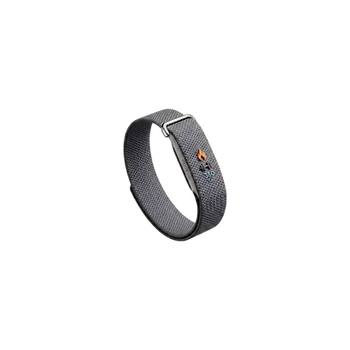
No independent study has ever tested the Fitbit Air's calorie accuracy. Not one, and none is in progress. What exists instead is peer-reviewed testing of older Fitbit hardware showing errors from roughly 4 percent on running to 54 percent on walking, a 52-study meta-analysis whose average bias is near zero but whose individual readings span minus 5 to plus 6 calories per minute, and a locked Google Health thread where 53 people report the Air reading several hundred calories a day above their Apple Watch. That last one feels like proof and is not. Two wrist devices disagreeing tells you nothing about which is right.
Want to see how far off your own device is likely to be by activity? Try the calorie burn accuracy calculator, then read on for why the Air is a harder case than most.
I went looking for a validation study on the Google Fitbit Air the week the complaints started piling up, expecting to find at least a preprint. There is nothing. That absence is the honest answer to this question, and everything below is an attempt to say something useful anyway.
What the Fitbit Air actually measures
The Air is a screenless pod on a band. Google's own spec page lists five pieces of hardware inside it, and the list is shorter than most people assume.
Component | Present on the Fitbit Air |
Optical heart rate monitor | Yes |
3-axis accelerometer and gyroscope | Yes |
Red and infrared sensors for SpO2 | Yes |
Device temperature sensor | Yes |
Vibration motor | Yes |
GPS | Not listed anywhere on the spec page |
Altimeter or barometer | Not listed. Google has separately confirmed the Air does not track floors |
The metrics Google names on that page are heart rate, motion data, blood oxygen and skin temperature variation. Calories, steps and distance are not named there at all, even though the app reports all three. For distance on outdoor activities the Air borrows your phone's GPS, a point confirmed independently by DC Rainmaker, Thurrott and Android Authority in their hands-on reviews.
So the Air estimates your energy burn from wrist motion, heart rate, and four numbers you typed into a profile. No altitude signal, no stride length from GPS, and no direct measure of work performed.
How Google Health turns that into a calorie number
Google's current support page is unusually thin on method. It says only that "Fitbit devices combine your basal metabolic rate (BMR) and your activity data to estimate your calories burned," that BMR is "based on the physical data you entered into your Google Health account like height, weight, sex, and age," and that "if your device tracks heart rate, your heart-rate data is also included, especially to estimate calories burned during exercise."
No formula is published. No coefficients, no weighting, and on the current page no mention of METs at all, which older Fitbit documentation did discuss. Google treats the algorithm as proprietary.
The structural point matters more than the missing detail. On an ordinary day, resting metabolism is the largest single component of what you burn. One user in the Google Health thread below reports their resting energy running at roughly 70 to 80 calories an hour, which is 1,700 to 1,900 calories a day before they stand up. Against a daily total in the 3,000s, that means most of the number on your screen is arithmetic performed on four profile fields, not something the sensors measured.
That has a practical consequence. If your height, weight, age or sex are stale or wrong in Google Health, a large share of your daily calorie total is wrong before the Air has sensed anything.
Nobody has tested the Fitbit Air, and that is not unusual
There is no peer-reviewed independent validation of Fitbit Air calorie accuracy. There is also none for the Charge 6 or the Sense 2. Validation studies run years behind release cycles, and the consumer wearable literature has never analysed device age as a variable at all, across 249 validation studies covering more than 430,000 participants.
This creates a specific trap. Almost every Fitbit calorie number you will find quoted online, including in this post, comes from the Charge 2 and Charge HR, which are 2015 and 2016 hardware with different sensors and a different algorithm generation. Those numbers describe the Fitbit lineage, not the Air, and anyone presenting them as an Air figure is guessing. With that caveat carried the whole way, here is what the lineage looks like.
What the Fitbit line's own numbers look like
Condition | Fitbit error | Study |
Running | 4.3% to 15% | Aberystwyth 2019 (Charge 2, n=12); Health & Technology 2019 (Charge 2, n=59) |
Walking | 53.5% overestimate | Aberystwyth 2019 (Charge 2, n=12) |
Cycling, low and mid intensity | 39% to 40% | |
All tested activities pooled | 44% | |
By exercise intensity | 16.9% to 85% | JMIR mHealth 2017 (Charge HR, n=62) |
Pooled across 52 studies | Mean bias +0.19 kcal/min, limits of agreement minus 5.32 to plus 5.70 |
That last row is the largest and best-designed evidence in the table, and it is routinely misread. A mean bias of 0.19 calories per minute sounds like Fitbit is almost perfect. That is not what the study says. The limits of agreement run from about 5 calories per minute too low to about 6 too high, which over a one-hour workout is a spread of roughly 660 calories between two people whose devices are both behaving normally. The average is near zero because overestimates and underestimates cancel across people, not because any individual reading is close.
For the full picture across the Fitbit range rather than the Air specifically, we cover how accurate Fitbit calorie burn is in a separate post with the per-activity detail.
Why your Apple Watch comparison is not a test
The most common Fitbit Air calorie complaint is a side-by-side with an Apple Watch, and it is worth walking through, because the comparison is doing less work than people think.
A Google Health Community thread opened on 1 June 2026, titled "Fitbit Air overestimate calories burned and is basically not usable," has been marked "I have the same question" by 53 people and is now locked. The original poster reports that on a short hike the Apple Watch logged 368 total calories with 277 active, while the Fitbit logged 465. For the whole day, Apple gave 3,104 and Fitbit gave 3,847.
A Gold Product Expert replied the next day: "Compared with other devices, it does appear that Fitbit estimates a higher calorie burn." He then added the sentence that most of the thread ignored: "Now which one is the most accurate or not (they are all estimations, so not perfect) is anyone's guess."
Two more users reported the same shape. One, wearing an Apple Watch Ultra alongside the Air, found Google Health running more than 1,000 calories a day above Apple's resting plus active total. Another put it at 500 to 800 calories a day. A Google Community Specialist replied on 25 June thanking people for sharing tips. No fix has been announced.
There are two separate things going on here, and only one of them is about accuracy.
First, the two apps are not reporting the same quantity
Apple Health splits energy into Active and Resting and shows them separately. Google Health shows one combined total. Comparing Apple's active-only number against Google's total produces a gap of 1,500 to 2,000 calories before either device has made an error. That exact question is asked in the thread and it is the right question to ask first. Check what you are actually comparing before concluding anything.
Second, agreement between two wrist devices is not evidence of accuracy
Even once you compare like with like, a disagreement between an Air and an Apple Watch cannot tell you which is closer to the truth, because neither has been measured against anything that knows the truth.
The two studies that did measure against gold standards are blunt about the scale. Shcherbina et al. 2017, Stanford, tested seven devices on 60 people against indirect calorimetry: energy expenditure error ranged from 27 to 93 percent, and the most accurate device in the set was still 27.4 percent off. Murakami et al. 2016 put 12 devices on the same 19 people and compared them against a 24-hour metabolic chamber and 15 days of doubly labelled water: the devices spanned minus 278 to plus 204 calories a day against the chamber, and minus 590 to minus 69 against doubly labelled water.
The inverse case makes the point even better. TechRadar's Matt Evans ran 10 km on 31 May 2026 wearing a Fitbit Air and an Apple Watch Ultra 3. The Air logged 773 calories, the Ultra logged 750. Three percent apart, which reads as reassuring, and tells you nothing, because on the Stanford numbers both could comfortably be 25 percent wrong in the same direction. On the same run the Air recorded 10.43 km against the Ultra's 10.03, so the two devices that nearly agreed on calories were 400 metres apart on distance.
The 9to5Google reviewer who spent a month with the Air reached the honest conclusion: "It's difficult for me to tell if its burned calorie count is more or less accurate than competing platforms. This is a very hard stat to get right."
If you want the cross-device picture, we compare how accurate your wearable's calorie burn is across five brands, and cover Apple Watch calorie accuracy on its own, where the 56-study meta-analysis puts the pooled error near 28 percent.
Where the missing GPS actually bites
The Air has no onboard GPS and leans on your phone. On the TechRadar run that produced a 400-metre overestimate on 10 km and a pace reading 10 seconds per kilometre too fast. Distance and pace are inputs to the calorie model on GPS-based activities, so an inflated distance becomes an inflated burn.
The deeper problem is not GPS at all. It is that a wrist device infers work from wrist motion, and there are common activities where the wrist stops moving while the work continues. Against bout-level indirect calorimetry, one 2021 study in Nature Communications found cumulative steady-state error of 42 percent for a wrist device against 13 percent for a sensor system worn on the shank and thigh. The worst conditions were stair climbing and cycling, which the authors attributed to gripping a handrail or handlebar and suppressing the wrist motion the model depends on.
The same failure runs through resistance training across every brand tested. Heart rate survives it, because the optical signal is fine. The energy model does not, because a model built on ambulatory motion plus heart rate has no valid mapping for isometric and eccentric load. That is an algorithm limit rather than a sensor defect, and no wristband or ring currently solves it.
Where the Air is genuinely fine is the passive stuff and steady cardio: resting heart rate, sleep duration, heart rate variability, and the shape of a moderate run. Its auto-detection is good too, and the 9to5Google reviewer rated it above the Apple Watch at catching when a run ended and a cooldown began. The same no-GPS constraint is why the Fitbit Air says VO2 max not tracked for most owners, which is a related and far more clear-cut case.
The one test that actually settles it
You cannot validate your Air against another wearable. You can validate it against your own body, and the method is unglamorous and pretty reliable.
The Gold Product Expert in that thread suggested it himself: log your food, eat back the exercise calories, and see whether you gain, lose or hold. From that you can work out your margin of error. One long-time Fitbit user in the same thread reported doing exactly that across multiple devices and months of logging, and landed on a stable figure: their real intake tracked at about 85 percent of what Fitbit reported, consistently enough that they now just multiply.
The protocol, if you want to run it, is five steps.
Log everything you eat for at least three to four weeks. Under four weeks, normal fluid and glycogen swings will swamp the signal you are looking for.
Weigh yourself under fixed conditions. Same time of day, same state, ideally first thing in the morning.
Average your first week against your last week rather than comparing single readings, which are noise.
Convert the change using roughly 3,500 calories per pound of body mass.
Compare that implied burn against what the Air reported over the same window. The ratio between them is your personal correction factor.
Two honest caveats. This measures your logging accuracy and the device's error together, so sloppy logging shows up as device error. And it only works if your error is consistent, which is the useful discovery either way: a device that is reliably 15 percent high is correctable and therefore usable, while a device that is randomly wrong is not. Four weeks of data tells you which one you own.
How to make the number less wrong
None of this makes the Air accurate in an absolute sense. It does close the gap between the number you see and the number you should believe.
Keep your profile current. Height, weight, age and sex drive the BMR component, and BMR is the majority of your daily total, so a weight that is 15 pounds stale quietly biases every single day.
Carry your phone on outdoor runs and rides. Without it the Air has no distance signal at all and is inferring from wrist motion alone.
Let the auto-detection label the activity, or log it manually if it misses. The model applies different assumptions per activity type, and an unlabelled session gets the generic treatment.
Do not eat back all of your exercise calories. Given error bands this wide, the exercise figure is the least trustworthy component of the total, and it is the one people most often treat as spendable.
Read week over week, not day to day. Relative change is what these devices are actually good at, and it is the only reading the research supports without heavy qualification.
If you also want to know how far the Air's other metrics can be trusted, the Fitbit Air vs WHOOP comparison tool lays the two screenless trackers side by side on sensors and features.
Common questions
How accurate is Fitbit Air calories burned?
Nobody knows, because no independent study has tested it. Peer-reviewed testing on older Fitbit hardware found errors from about 4 percent on running to 54 percent on walking, and a 52-study meta-analysis found individual readings ranging from 5 calories per minute too low to 6 too high. Treat the Air's number as a trend line, not a measurement.
Does the Google Fitbit Air overestimate calories?
Many users report that it does relative to Apple Health, and a Gold Product Expert in the Google Health Community agreed Fitbit "does appear to estimate a higher calorie burn" than other devices. That is a comparison between two estimates, not a measurement of error. No study has established the direction of the Air's bias.
Why is my Fitbit Air calorie count higher than my Apple Watch?
Check first whether you are comparing like with like. Apple Health splits Active and Resting energy; Google Health reports one combined total. Comparing Apple's active-only figure to Google's total creates a gap of 1,500 to 2,000 calories before either device is wrong. If you have already summed Apple's two figures and a large gap remains, you are seeing two different proprietary models disagree, which does not tell you which is closer to the truth.
Does the Fitbit Air need GPS to count calories?
No. It estimates calories from heart rate, wrist motion and your profile data whether or not GPS is available. Carrying your phone improves distance and pace on outdoor activities, and those feed the estimate, so it makes the number better without being required.
Has the Google Fitbit Air been tested for calorie accuracy?
Not independently, and not by Google publicly. There is also no published calorie validation for the Charge 6 or the Sense 2. Every Fitbit calorie figure in circulation comes from the Charge 2 or Charge HR, which are 2015 and 2016 hardware.
Can I use Fitbit Air calories for weight loss?
Not as an absolute number. You can use it as a consistent reference point once you have calibrated it: log intake for three to four weeks, track weight change under fixed conditions, and work out your own correction factor. A device that is reliably wrong in one direction is usable. A device you have not calibrated is not.
How do I make Fitbit Air calorie tracking more accurate?
Keep your height, weight, age and sex current in Google Health, since those drive the BMR component that makes up most of your daily total. Carry your phone on outdoor workouts. Make sure activities are labelled correctly. Read week-over-week change rather than daily totals, and do not eat back the full exercise figure.
The bottom line
The honest answer to "how accurate is Fitbit Air calories burned" is that it has never been measured, and the Apple Watch comparison most people reach for cannot answer it either. The Air's hardware is thinner than its competitors, most of your daily total is arithmetic on your profile rather than sensor data, and the wider Fitbit evidence base describes hardware two generations old.
What you can do is calibrate it against your own body over a month and find out whether your error is consistent. If it is, the number becomes useful. That is a lower bar than accuracy, a far more achievable one, and the same bar every wearable on the market should be held to.
Key sources
Google's Fitbit Air specifications and its calories burned support page, both read September 2026; Chevance et al. 2022 in JMIR mHealth and uHealth, 52 studies and 203 device comparisons, the largest Fitbit-specific meta-analysis available; Shcherbina et al. 2017 in the Journal of Personalized Medicine, Stanford, 7 devices and 60 participants against indirect calorimetry; Murakami et al. 2016 in JAMA Internal Medicine, 12 devices on 19 participants against a metabolic chamber and doubly labelled water; Health & Technology 2019, Charge 2, n=59; JMIR mHealth 2017, Charge HR, n=62; Nature Communications 2021 on wrist versus lower-limb sensor placement for energy expenditure; the Google Health Community thread Fitbit Air overestimate calories burned, opened June 2026, 53 same-question votes, now locked; and hands-on reviews from TechRadar, 9to5Google and DC Rainmaker.
A note on what this post leaves out
One figure circulates widely as Fitbit's daily total error, usually quoted around 15 to 16 percent and attributed to the Chevance meta-analysis. That attribution is wrong. Chevance reports a bias of 0.19 calories per minute with limits of agreement of minus 5.32 to plus 5.70 and publishes no daily percentage error at all. We could not trace the 16 percent figure to any named study, so it is not in the table above.
We have also left out the per-device numbers from a 2026 resistance-training study whose abstract says devices underestimated energy expenditure while its own results tables show the opposite. The general finding, that wrist energy models fail on resistance work, is well supported elsewhere and is reported above. Its individual device values are not, because the Fitbit cell sits 20 to 30 times away from the other three devices in the same protocol.
Disclaimer: Kygo is a personal data aggregation and insights platform designed for informational purposes only. The information provided by Kygo, including correlations, patterns, and trends identified in your data, does not constitute medical advice, diagnosis, or treatment. Always consult a licensed healthcare provider with any questions regarding medical conditions.
If you have run the four-week calibration on your own Fitbit Air, I would like to know what multiplier you landed on and whether it held steady.